Chapter I: RagnarökMemory after Destruction01 — PrologueEvery civilization tells stories about its end.
For the Norse, it was Ragnarök.
02 — StoryWhen Ragnarök ended, the gods were gone...
...
What survived was not victory...
but memory.
The realms may perish,
but their stories endure.
03 — Design PhilosophyRagnarök is often remembered as the end of the world.
To me, it represents something different.
It is the moment when every outcome is already known, yet every warrior still chooses to stand and fight.
That quiet determination became the foundation of this project.
Rather than recreating Norse mythology through obvious symbols, I wanted to express its spirit through materials, proportions and subtle details.
The design intentionally avoids excessive ornamentation.
Every engraved line, every brass accent and every raw aluminum surface exists to support a single idea:
Strength does not need to announce itself.
It simply remains.
The brushed aluminum reflects the passage of time.
Brass represents the presence of the divine.
The engraved runes are not decorations, but traces left behind by a civilization that has already disappeared.
At the center of the project stands Gungnir, Odin's spear.
Not as a weapon.
But as a symbol of unwavering purpose.
Every design decision follows the same philosophy:
Remove everything unnecessary until only the story remains.
Because after Ragnarök, there is no audience left to impress.
...
Only memories carved into metal.
04 — Design LanguageMaterial
Brushed raw aluminum records the passage of time.
Divinity
Brass represents the presence of the gods.
Purpose
Gungnir stands as a symbol of unwavering intent.
Memory
Runes survive as fragments of a forgotten civilization.
Silence
Negative space speaks louder than ornament.
05 — Build LogSketch and idea finding
First idea, I was going to do a copy of Tofu TKL Year of the Horse. But after fihising sketch, I canceled it, because I want to make a story for the Keyboard.
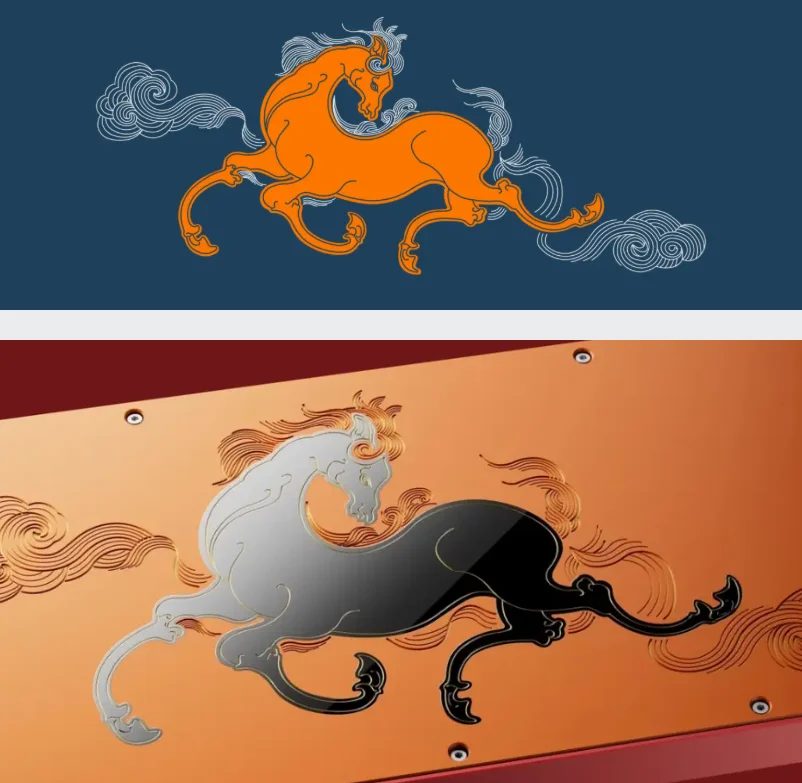
After that, I found some ideas and beginning sketched and canceled many times. The turning point came when I discovered Ragnarök. It naturally complemented the visual language of GMK Norse, and from that moment the project evolved into what it is today.
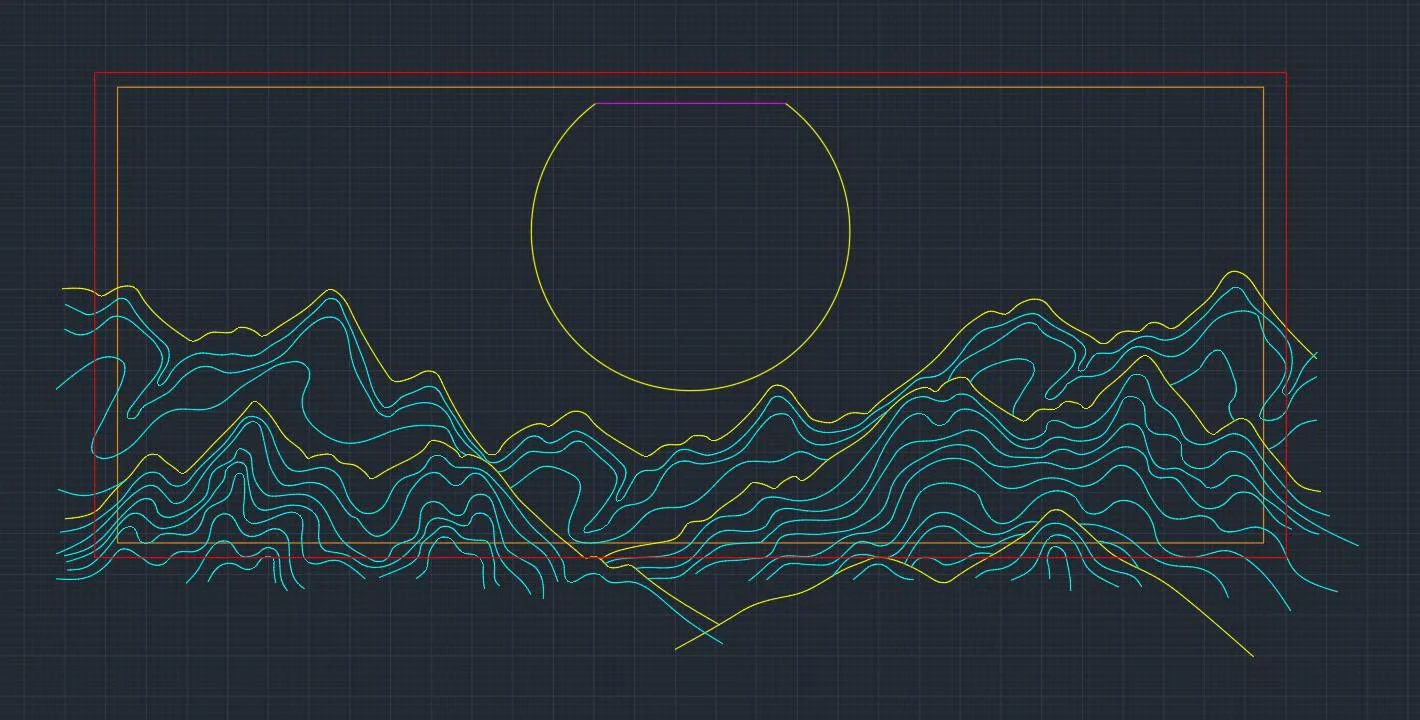
After the CAD work was complete, the real challenge began: finding a CNC shop willing to modify a pre-manufactured keyboard case. Most workshops preferred starting from raw stock rather than machining an existing part.
Working in the interior design industry, I had access to many CNC workshops through my partners in the signage business. Ironically, despite all those connections, I couldn't find a single shop willing to modify an existing keyboard case.
So I went back to square one, searching online and reaching out to machine shops near me, one by one, hoping someone would be willing to give it a try.
I refused to settle for a compromise.
Laser engraving was considered. Chemical etching was considered. Every suggestion from friends and industry partners was carefully explored.
But every road led back to the same conclusion: only CNC machining could deliver the result I had imagined from the very beginning.
With that decision made, there was only one option left—to keep searching, even with only a faint hope that someone would eventually say yes.
After nearly ten days of searching, I was ready to give up.
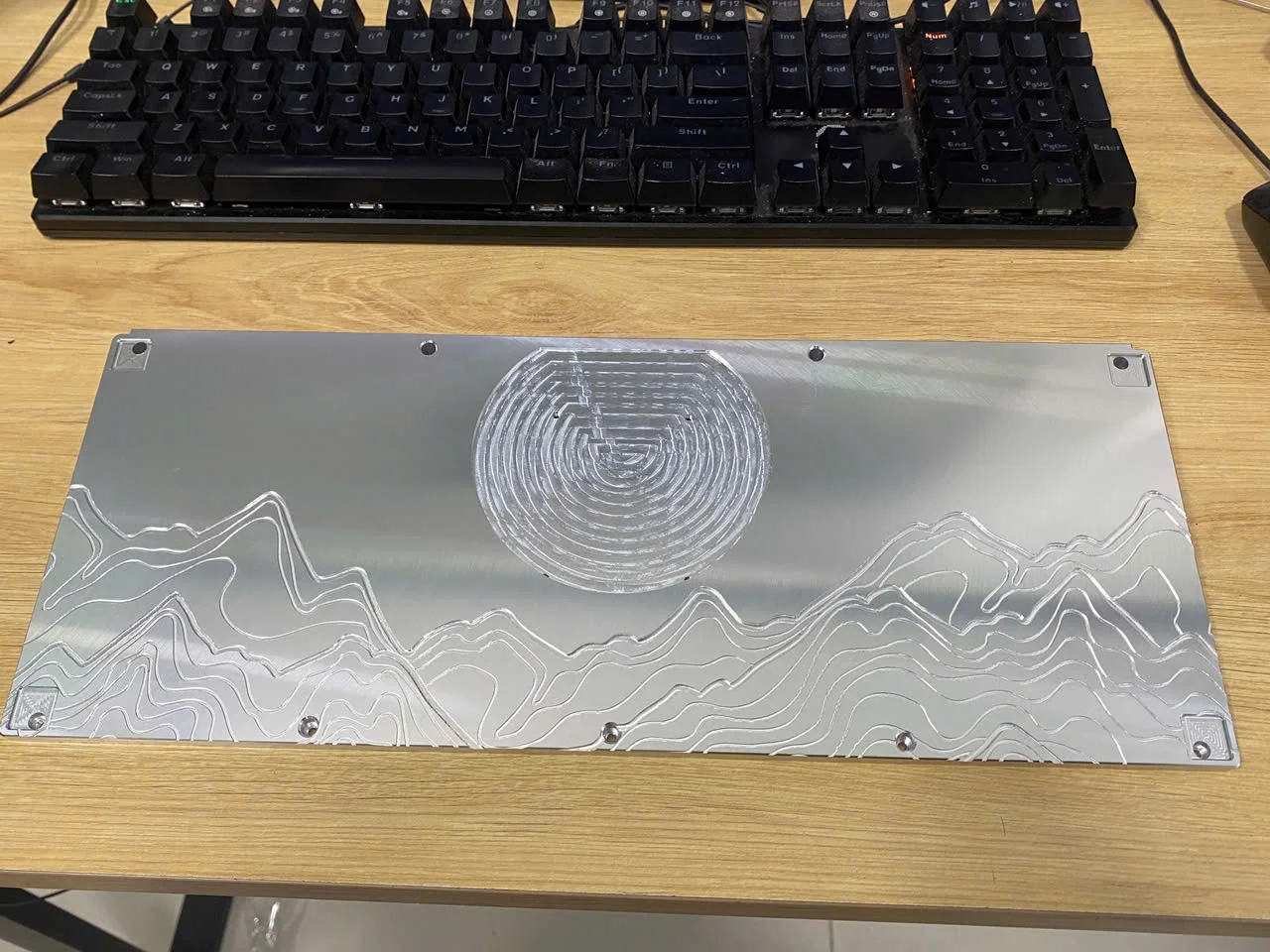
Then I met a machinist who specialized in CNC parts for motorcycles. Unlike everyone before him, he didn't immediately say no.
He listened to the idea, studied the drawings, and agreed to help bring the project to life.
And this was the result of his craftsmanship:
Painting was an entirely different story.
Working in the interior industry, I had seen and approved countless finishes, colors and coatings.
But seeing them and creating them are two very different things.
This was my first time holding the spray gun myself...
And that was when the real learning began.
With no prior experience in automotive finishing, I had to start from the very beginning.
I learned the differences between lacquer and acrylic paints, how different paint systems behaved, how to mix paint, apply primer, build color in thin coats, repair imperfections, and prepare the surface between each stage.
Every step was new.
Every mistake became another lesson.
So I kept experimenting—painting, sanding, stripping, repainting, and refining—until the finish finally matched the vision I had in mind.
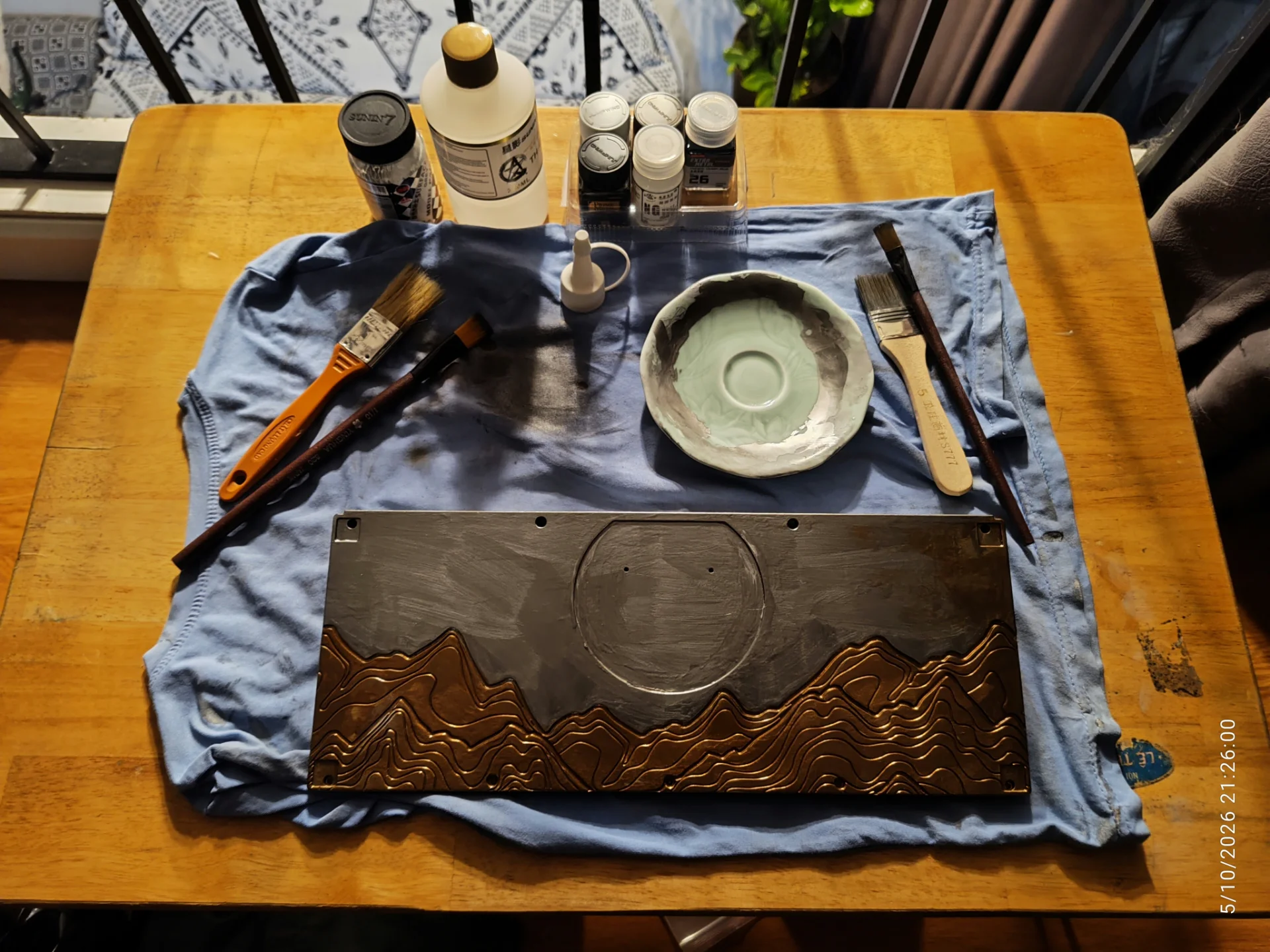
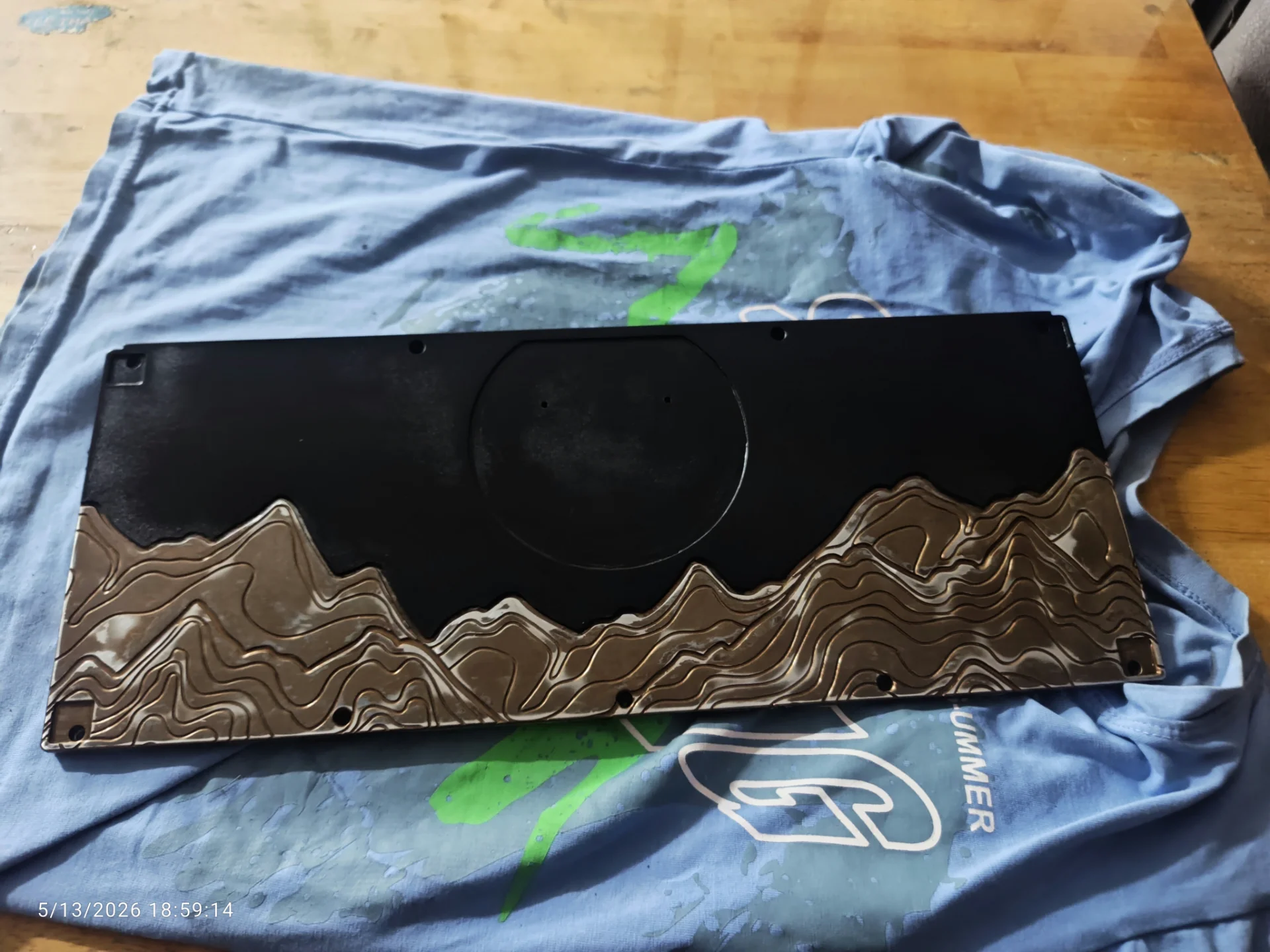
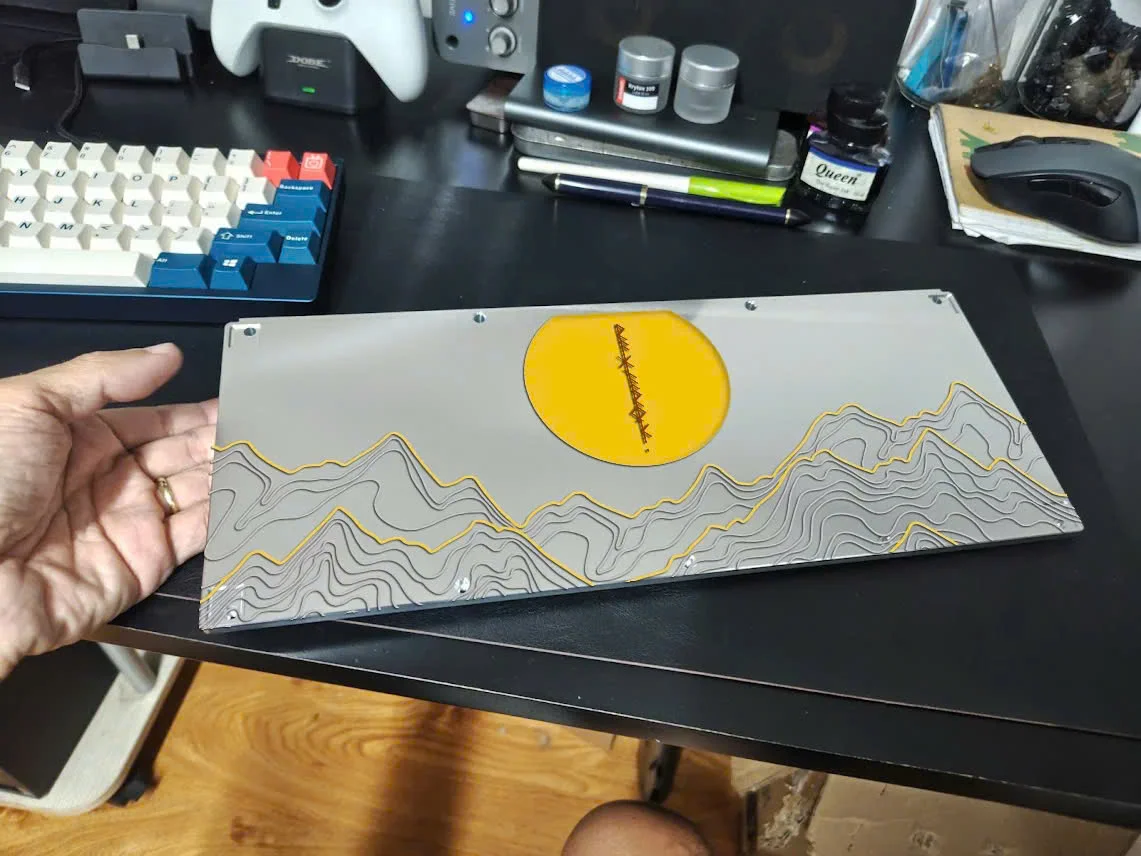
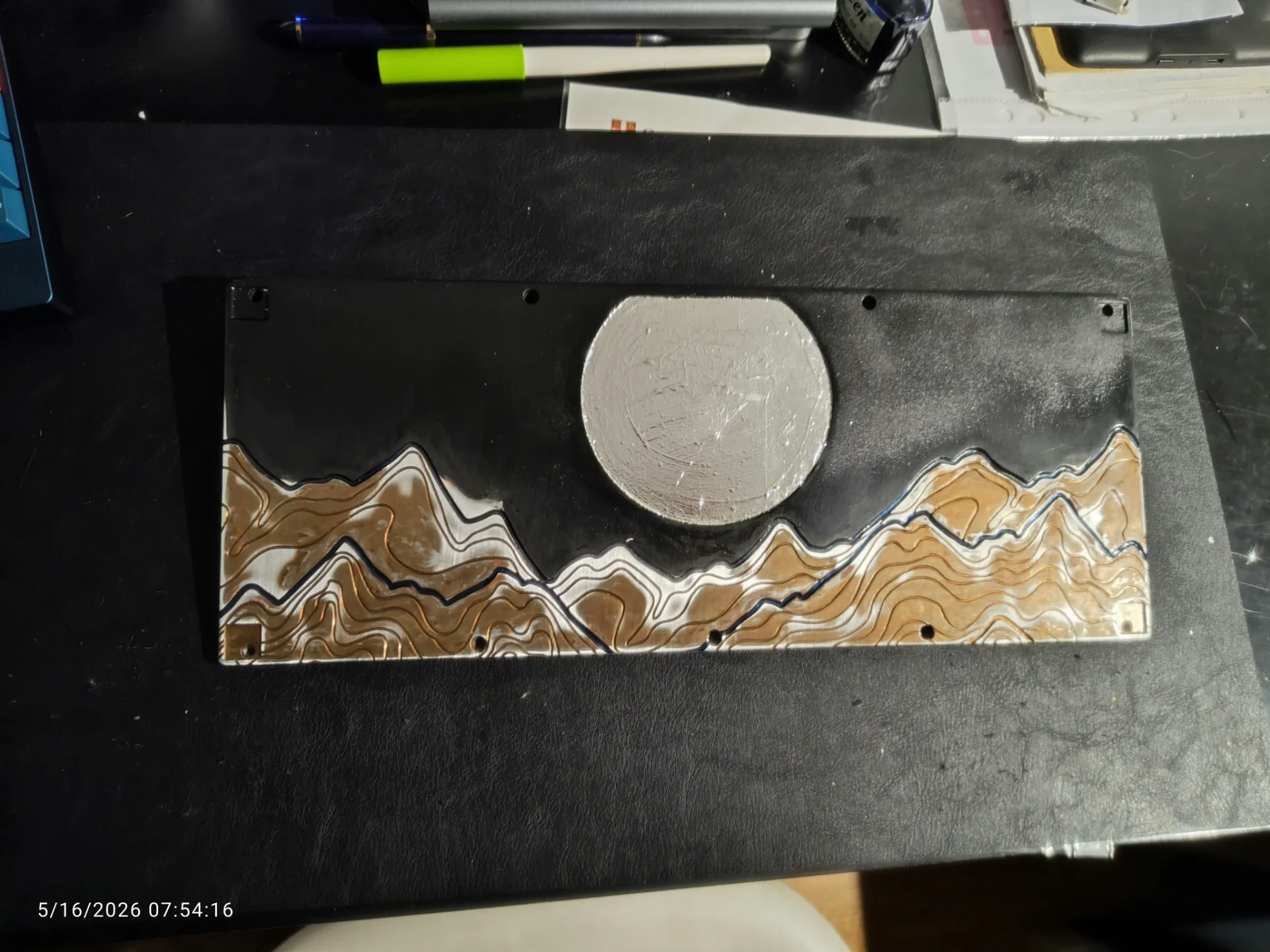
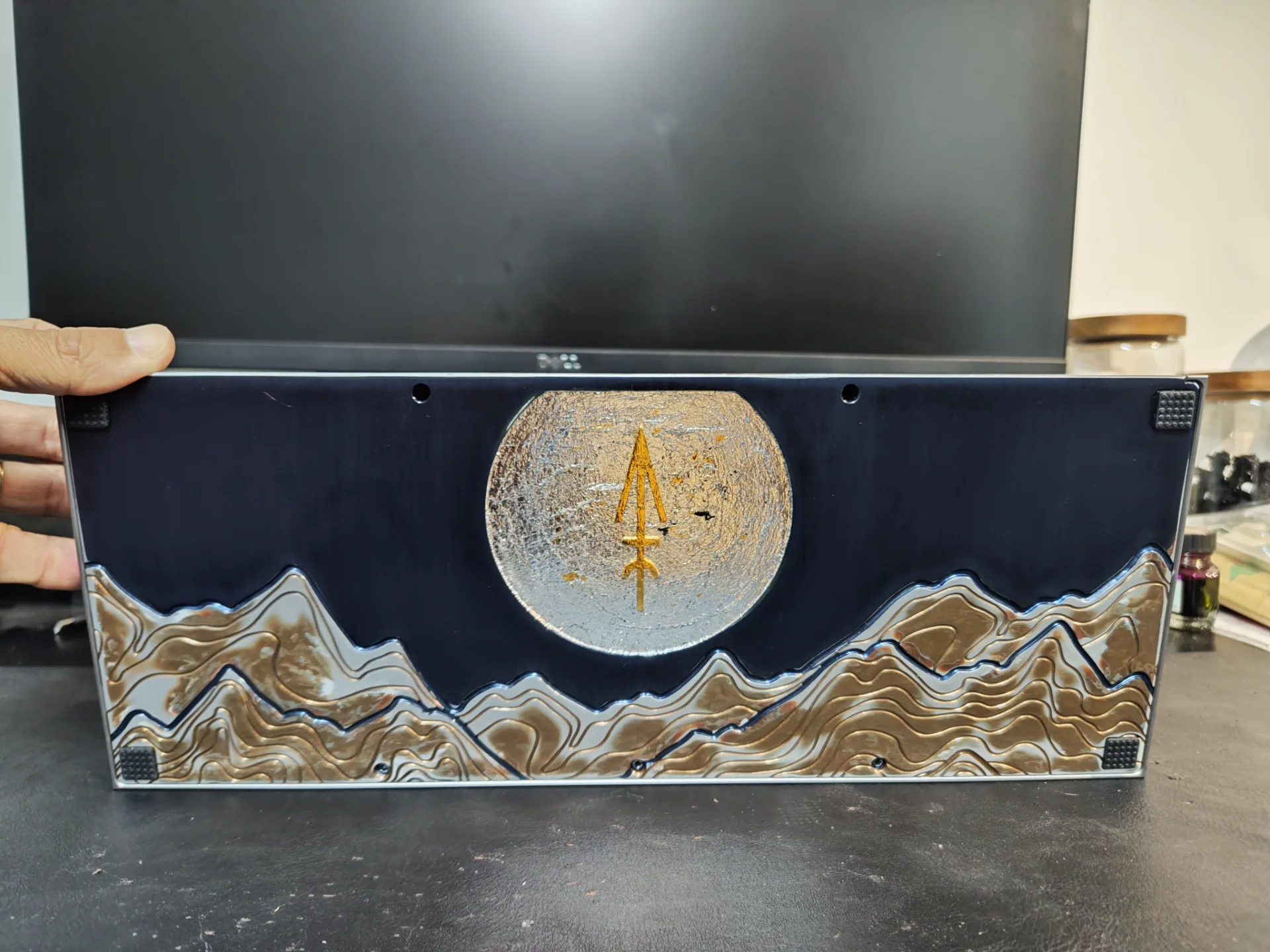
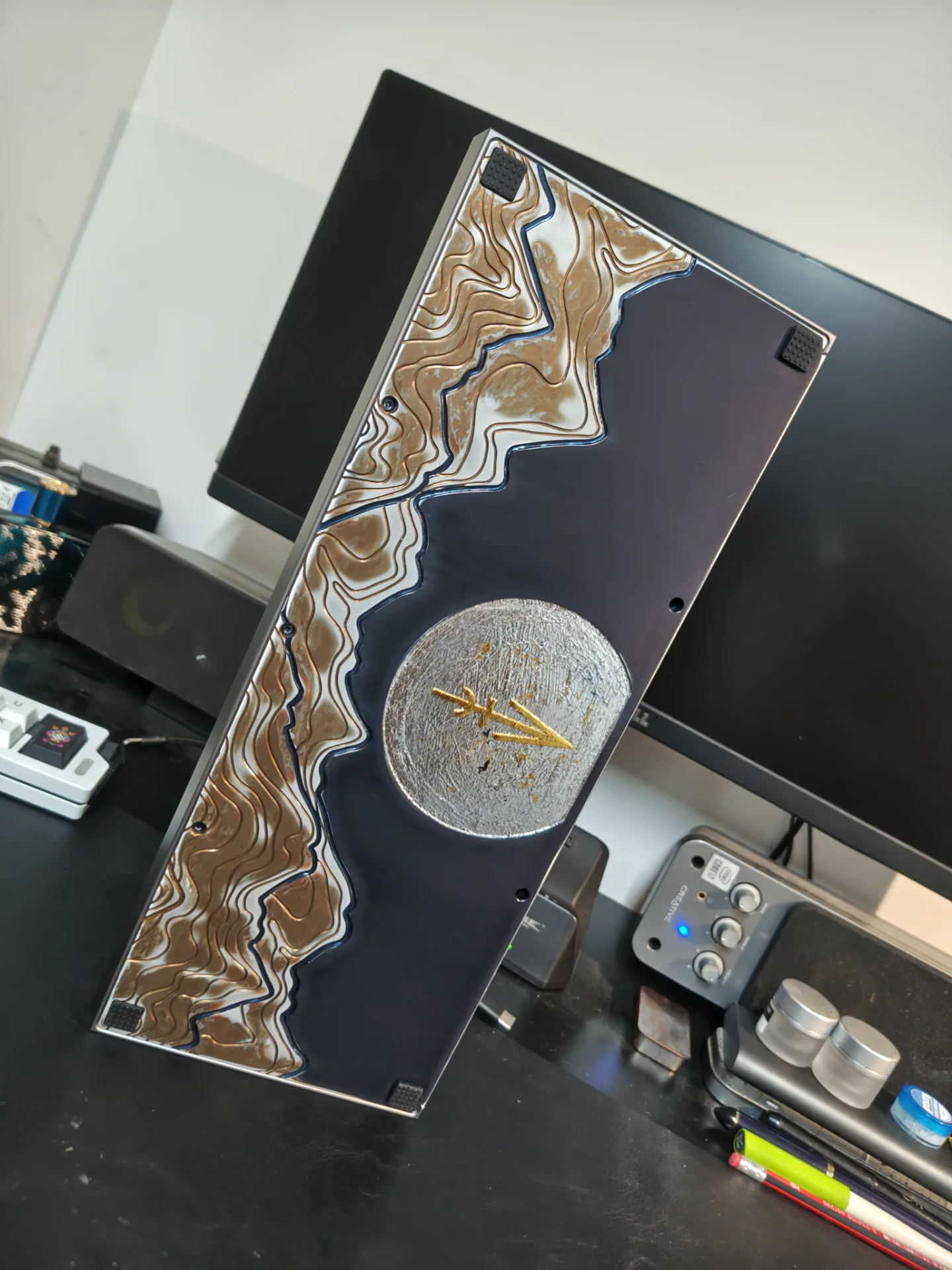
First finishing, The moon was covered in silver leaf, giving it an aged, weathered appearance. The natural wrinkles and textures of the leaf create a surface reminiscent of the moon's rugged terrain.
The first iteration placed the Gungnir emblem directly on the moon. While the concept later evolved into a more subtle approach, this marked the beginning of Gungnir's journey through the trilogy.
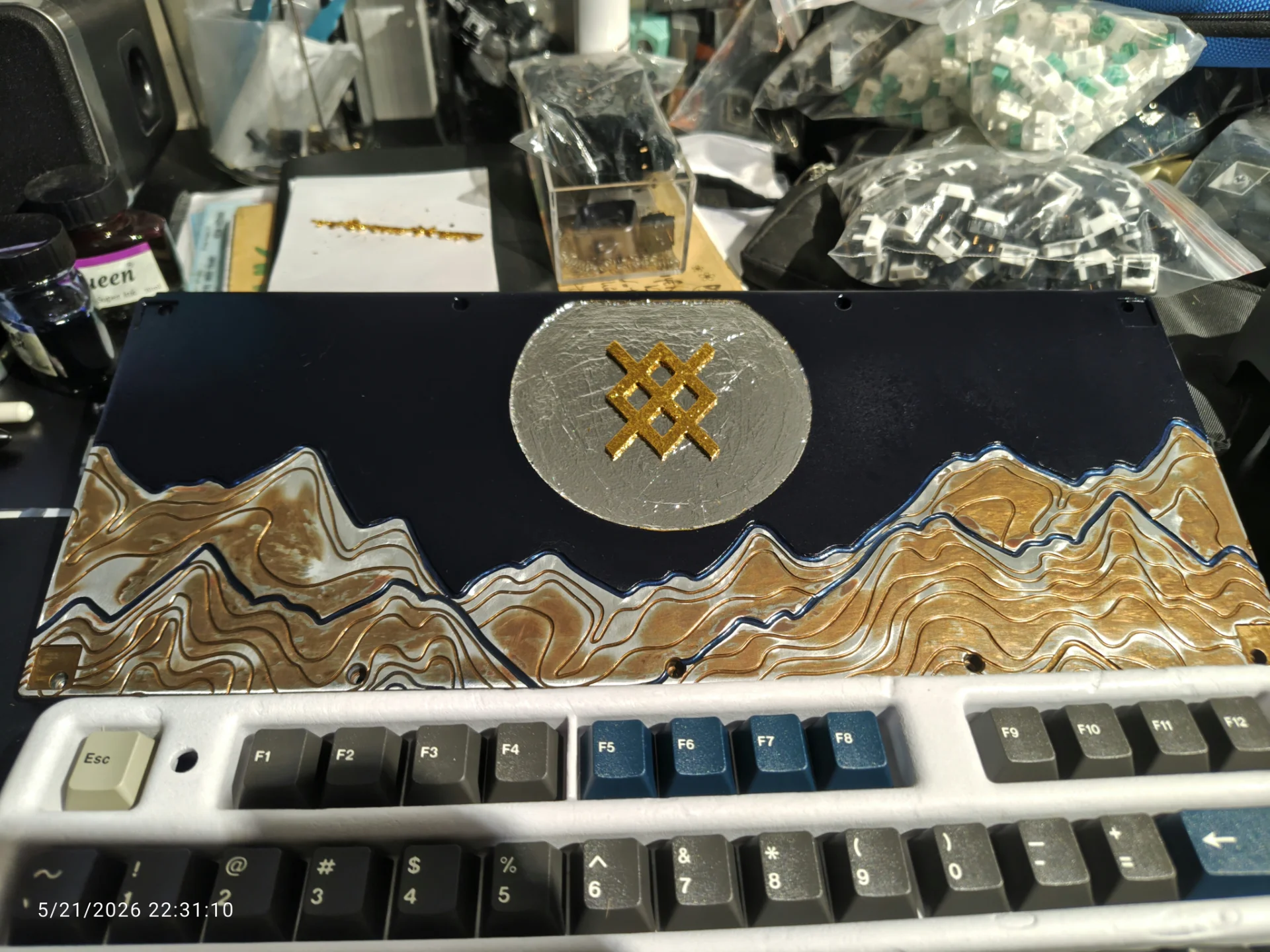
The project had reached a point where most people would probably call it finished.
I couldn't.
The proportions of Gungnir still felt unresolved, and the black background lacked the quiet depth I wanted the night sky to convey.
Rather than accepting those compromises, I chose to revisit both elements and refine them until they became part of the same visual language.
The moon was reworked as well.
Silver remained the dominant finish, but hints of gold and black were allowed to emerge through the surface.
Rather than creating a perfect celestial body, the layered finish tells a story of weathering, destruction, and the passage of time.
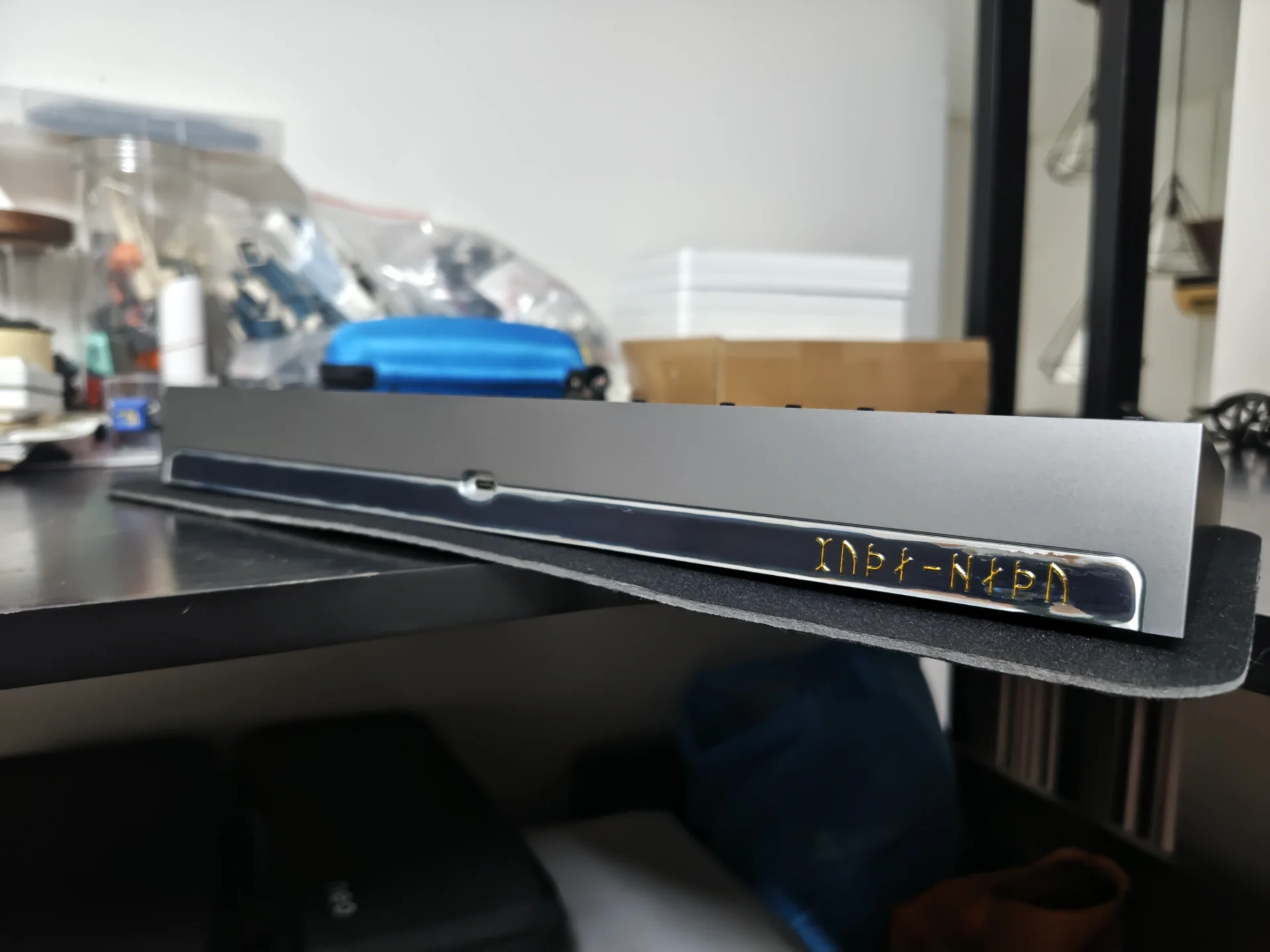
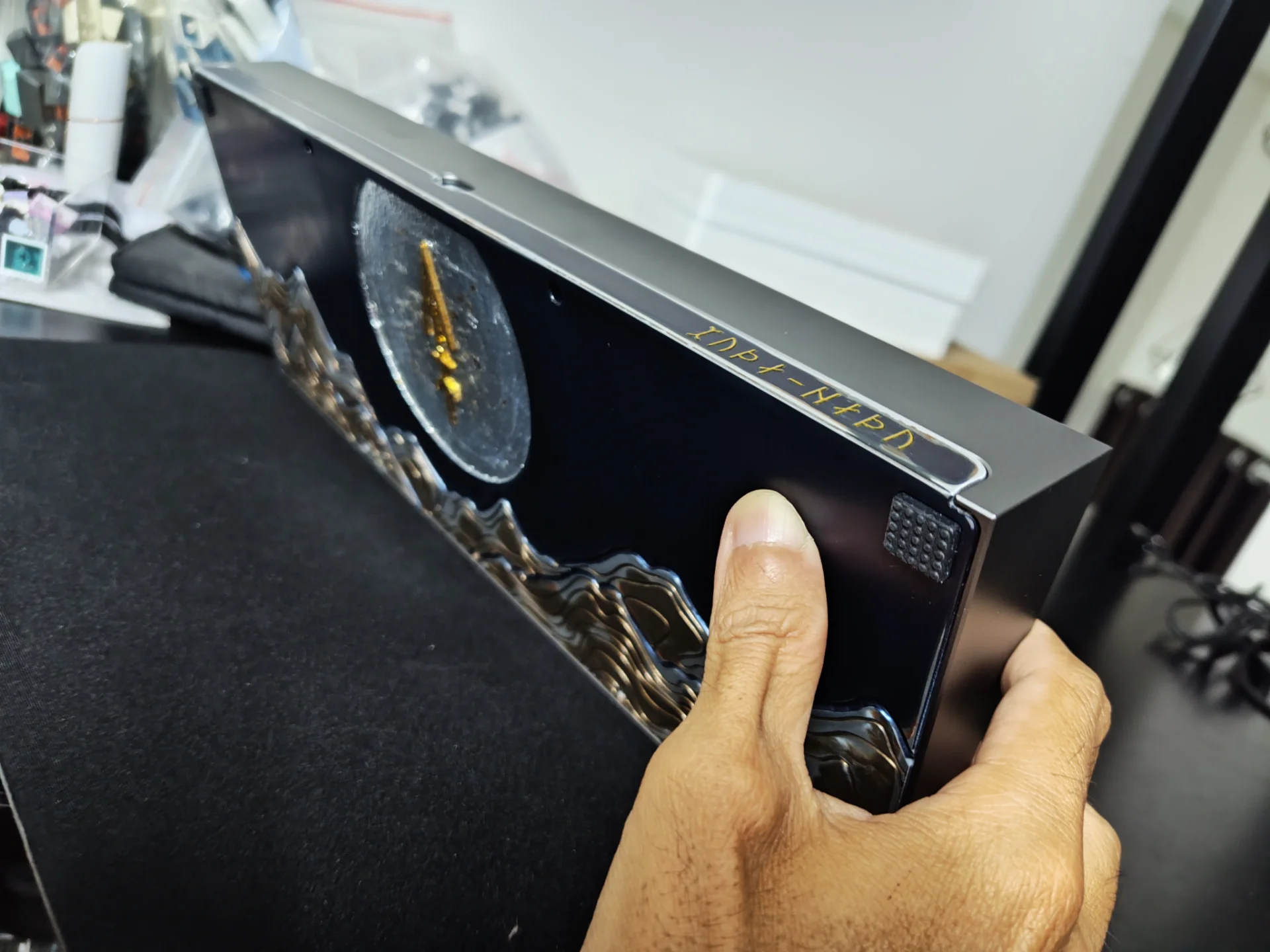
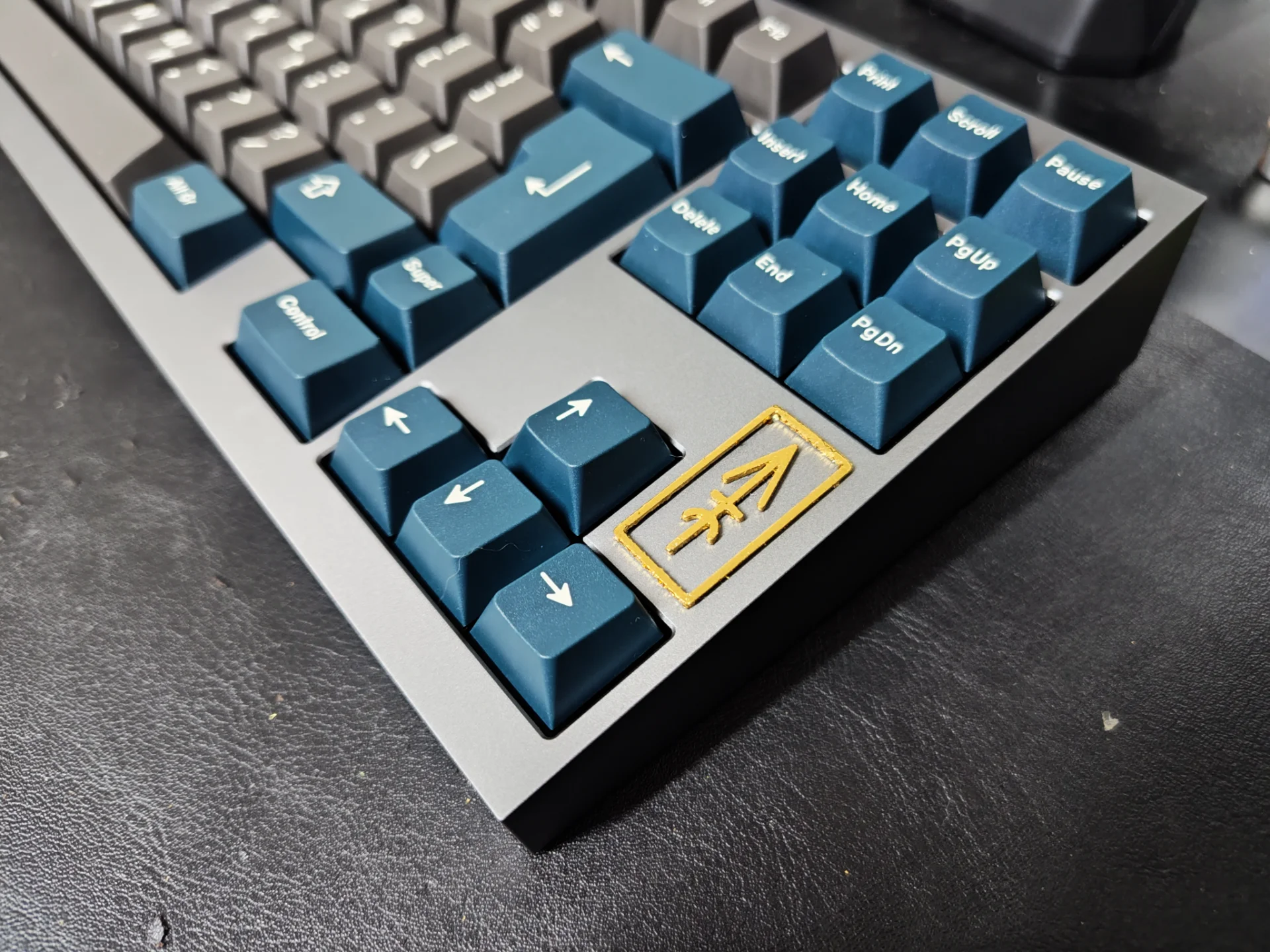
Ironically, the smallest detail became the biggest challenge.
The front edge occupied my thoughts more than any other part of the build.
The concept itself was clear. The real challenge was figuring out how to execute it.
Its shape left very little room for conventional machining. I considered leaving it plain, applying gold leaf, applying 3D printing and even engraving it entirely by hand.
For a long time, none of those options felt right.
Eventually, I found the answer. And this was the result.
 06 — Final Build
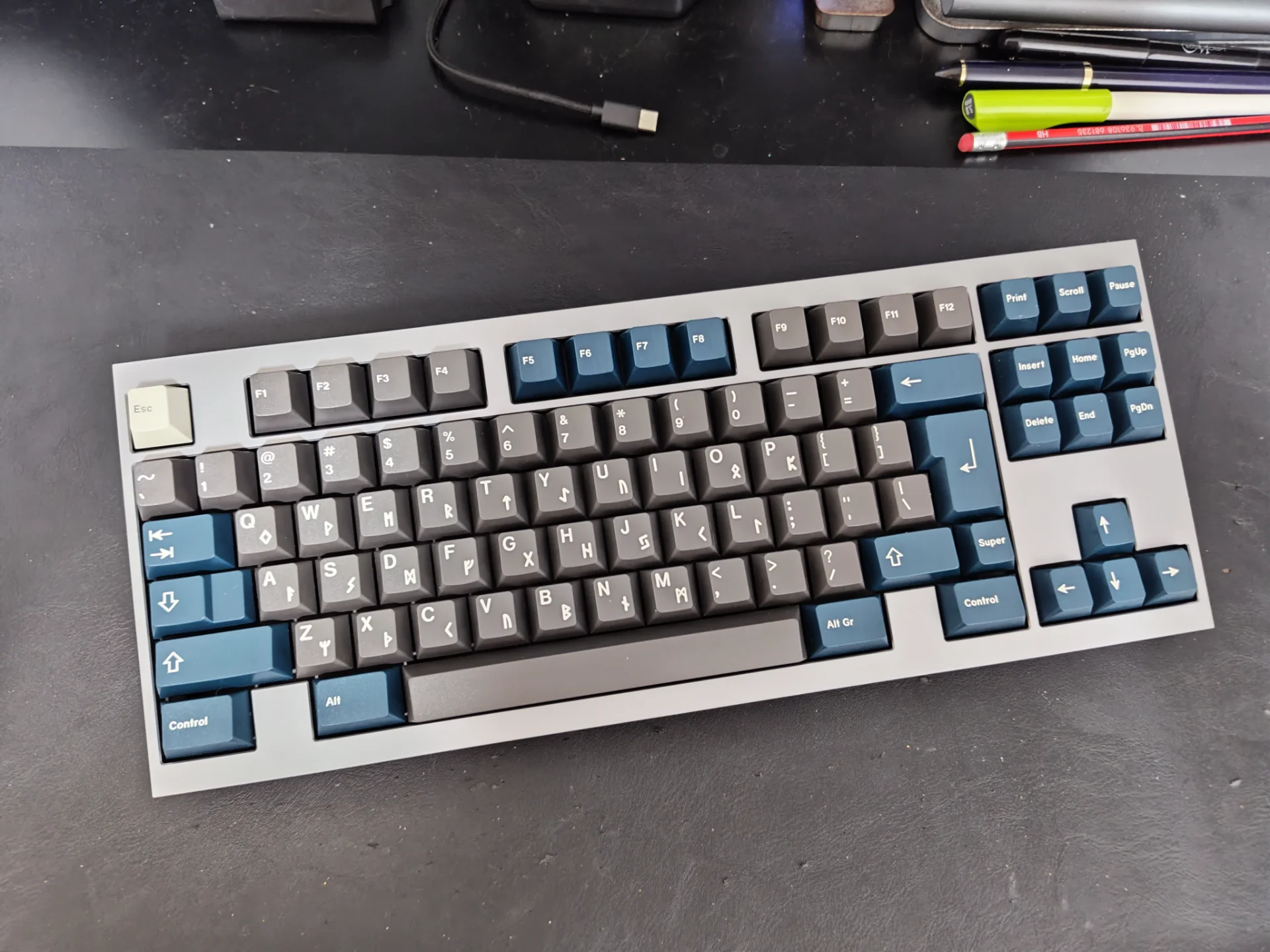
With the keycaps in place, the project finally became what I had imagined from the very beginning. After months of searching, learning, experimenting and refining, Ragnarök had passed.
...
The journey continued.
 07 — Closing
What survived was not victory, but memory.
This project began as a simple idea—to build a keyboard inspired by Norse mythology.
Along the way, it became something far more personal.
It taught me new skills, introduced me to remarkable people, and reminded me that the most meaningful projects are never built alone.
Every civilization leaves behind its own memories.
This was the first.
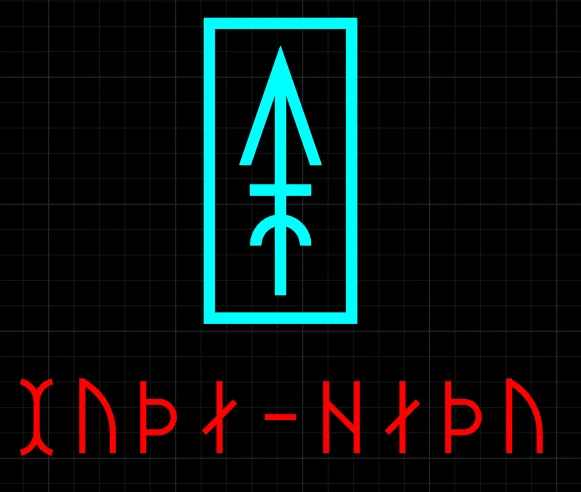
G O D S B A T T L E


